Last updated November 23, 2026
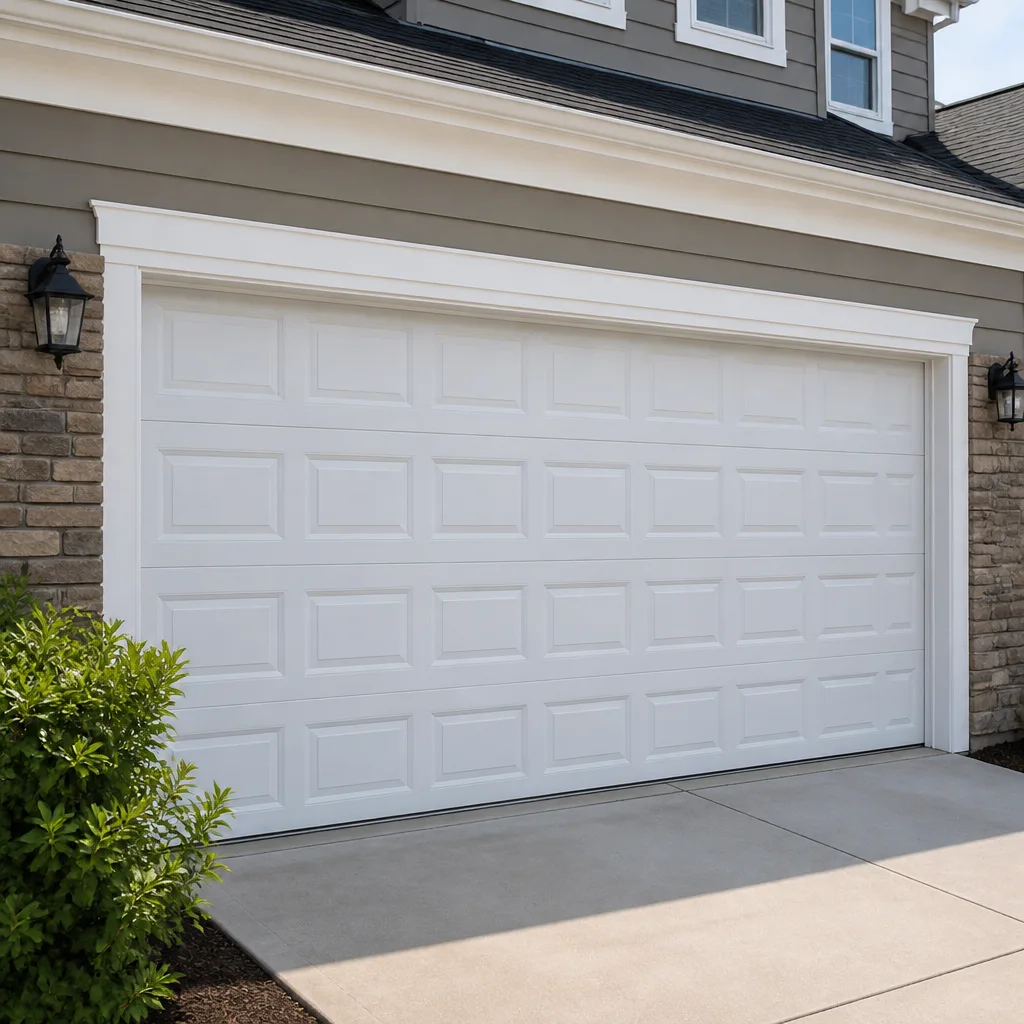 Raised-panel steel
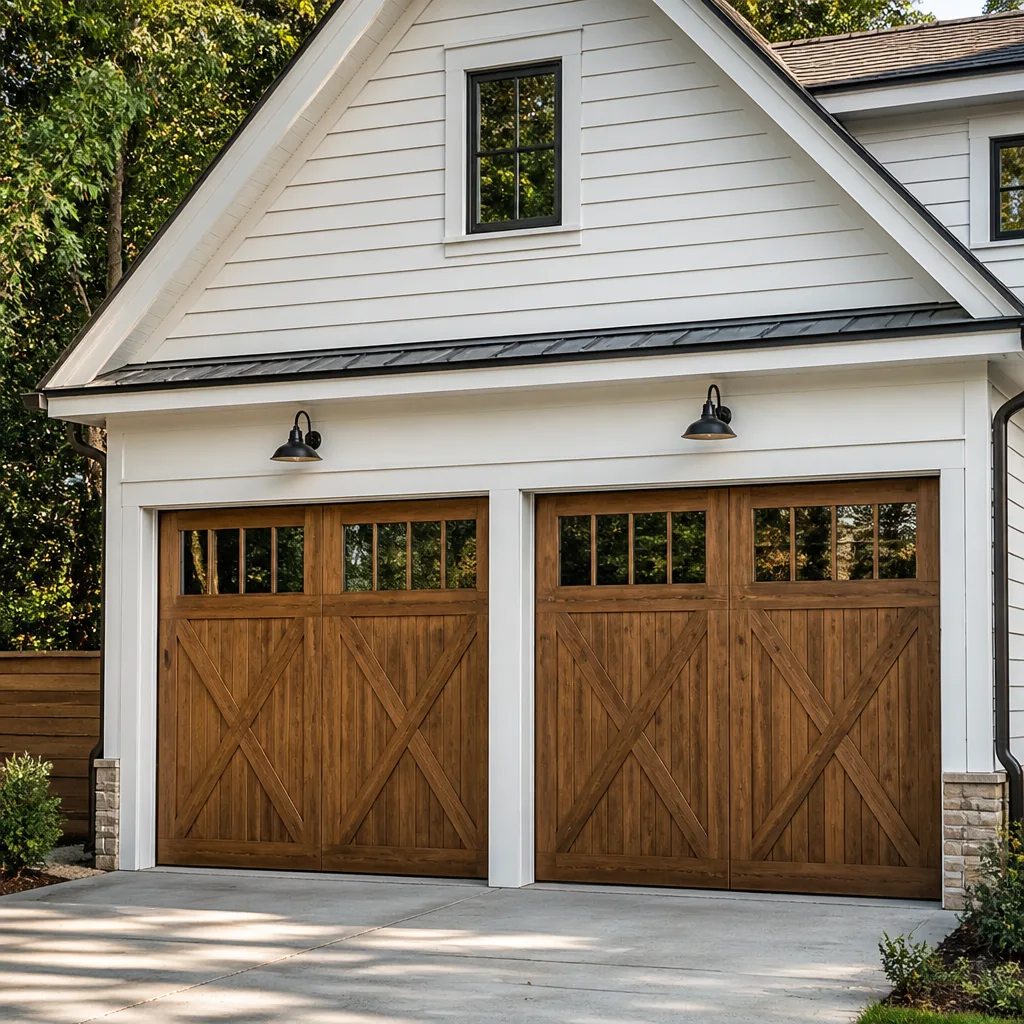 Carriage house
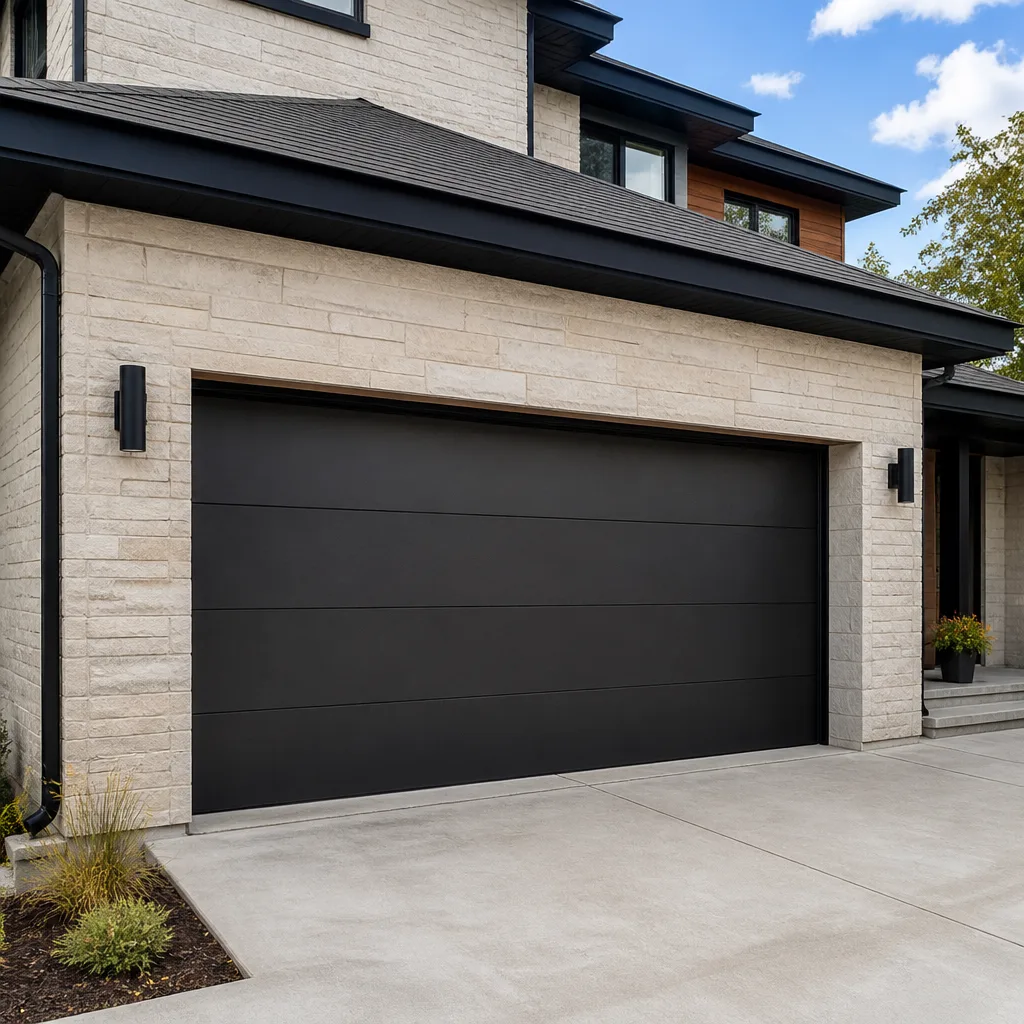 Modern flush
 Full-view glass
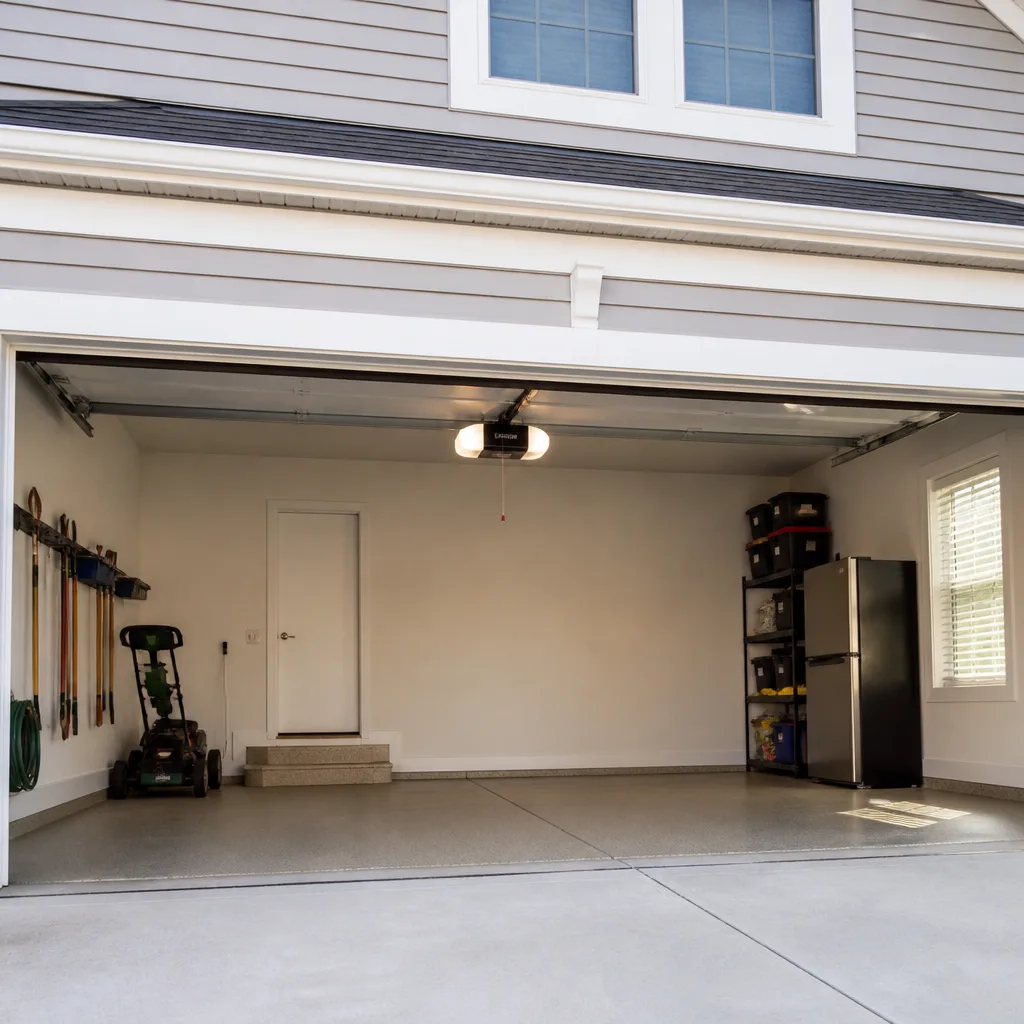 LiftMaster openers
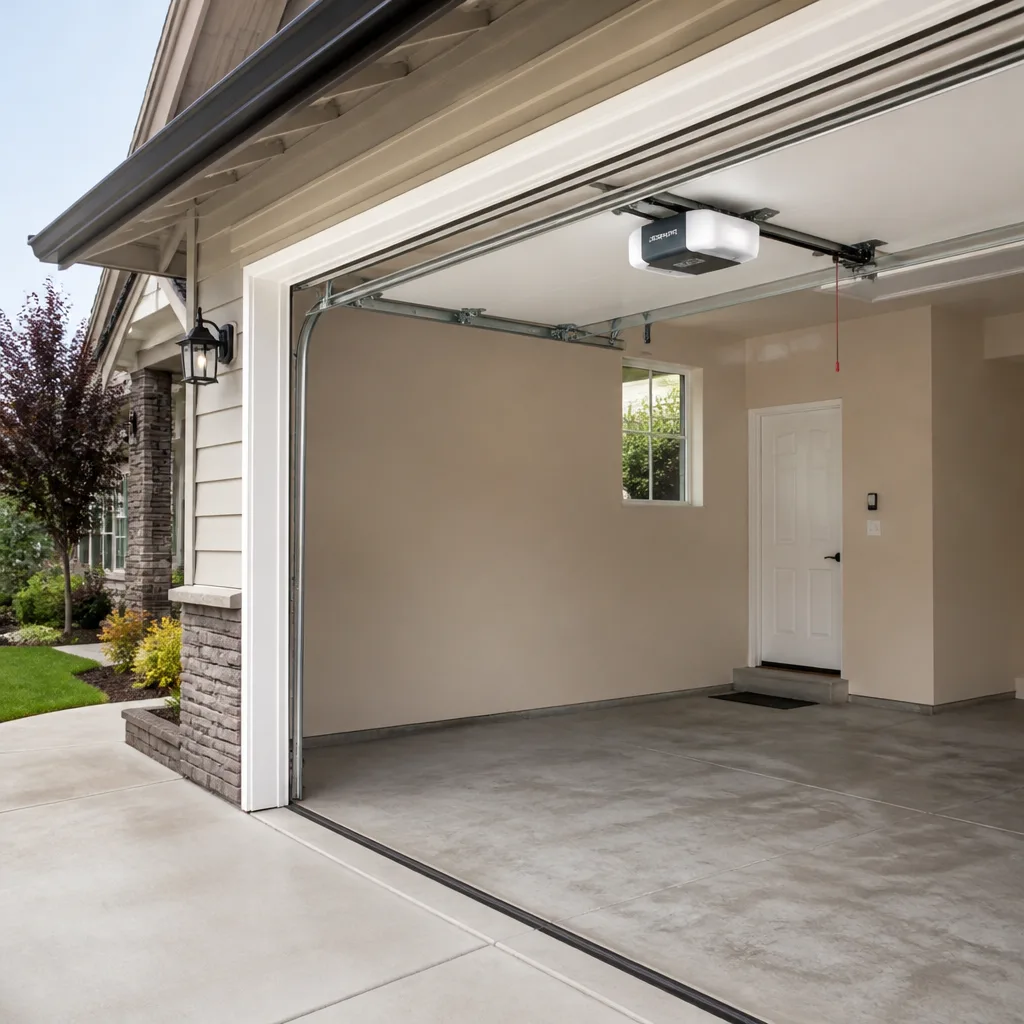 Chamberlain openers
Full 25-point door and opener safety check with every visit - springs, cables, rollers, tracks, and your LiftMaster or Chamberlain opener included
You get a price before we start. It does not change when the pro arrives.
Get your free estimateGarage Door Emergency Preparedness Guide for Port Chester Homes
Most garage door emergencies we get called to aren’t really about the door. They’re about the moment after the door fails, when the homeowner reaches for a handle, a cord, or a wrench and makes a bad situation worse. A stuck door is survivable. A door that comes down on a foot because someone tried to force it is not. This guide is about the part nobody plans for: what you actually do in the first ten minutes of a garage door failure in Port Chester, before a technician arrives. You’ll learn the manual release that saves you from a dead opener, how to secure a door stuck open against wind and weather, why battery backup is more necessary here than in most places, and what to say when you call so the right parts show up on the first visit.
Quick Answer
A garage door emergency is managed in the first ten minutes by doing three things in order: stay clear of the door and its springs, release the opener with the red cord only when the door is fully down, and secure the opening if the door is stuck open. Call a specialist for anything involving springs, cables, or a door that has left its tracks. Port Chester Garage Door Repair Pros handles emergency garage door calls at (877) 492-4069, and our technicians have up to 10 years of experience on the brands most homes here already have.
Styles & brands we work with
- Raised-panel steel
- Carriage house
- Modern flush
- Full-view glass
- LiftMaster openers
- Chamberlain openers
Table of Contents
- How do you manually release a garage door opener in an emergency?
- How do you secure a garage door that’s stuck open?
- What do you do if a spring breaks and the door is stuck closed?
- Why do power outages hit Port Chester garage doors harder?
- Which battery backup openers hold up in cold weather?
- What should you tell a dispatcher when you call?
- Common Mistakes to Avoid
- When to Call a Professional
How do you manually release a garage door opener in an emergency?
You pull the red release cord hanging from the opener trolley, but only when the door is fully closed and you’re standing clear of the door’s path. That’s the short answer. The part that catches people is the timing and the angle.
Here’s the procedure in order:
- Close the door first if it’s open and the opener has power. Release the trolley only with the door resting fully down. Releasing a door that’s partway up drops the full weight onto the springs and can snap a cable or bend a panel.
- Stand to the side, not under the door. Pull the cord straight down toward the floor with a firm, steady pull. Don’t yank it at an angle toward you or to the side.
- Listen for the click. The trolley should disengage from the carriage with a distinct click. If it doesn’t, stop and call rather than forcing it.
- Lift the door by the bottom handle with both hands, straight up, then let it settle onto the manual lock or hold it while someone drives out.
- Re-engage the trolley by running the opener once while the door is down. Most openers reconnect on the next cycle.
Here’s the specific mistake that damages the opener: pulling the cord at an angle while the door is still partially open and the opener is trying to run. The trolley jams against the carriage, the release mechanism bends, and you’ve turned a dead-opener call into a trolley replacement on top of it. In our experience, that single move accounts for a good share of the non-spring repairs we see after a storm.
If the opener is completely dead and the door won’t budge even after release, don’t force it. A door with a broken spring or a jumped cable won’t lift safely by hand no matter how hard you pull, and lifting it anyway can bring it down on you. That’s a call, not a wrestling match.
How do you secure a garage door that’s stuck open?
A garage door stuck open is a security problem first and a wind problem second, and in a dense neighborhood like Port Chester both matter at the same time. You get it closed or you block it, but you don’t leave it gaping overnight.
Work through this in order:
- Check the obvious first. Look for an obstruction under the safety beam near the floor, a manual lock engaged on the track, or a disconnected trolley. Sometimes a door “stuck open” is a door that thinks something is in the way.
- Try the wall button, then the remote, then the keypad. If one works and the others don’t, you’ve narrowed it to a remote or receiver problem rather than a mechanical one, which is a much easier fix.
- If the door is halfway and holding, leave it and secure the opening from inside. Latch the entry door from the house, block the gap with something visible, and move anything of value out of sight.
- During a storm or nor’easter, close it if at all possible. An open panel is a sail. Wind gets under it, the door flexes, and the tracks or panels take the load. A bent track from wind is a repair; a panel that tears free is a replacement.
- Don’t prop the door with a stick or wedge. A 200-plus pound door resting on a prop is one nudge away from falling, and the prop gives you false confidence.
If the door is stuck fully open and won’t move, that’s a real emergency for a Port Chester homeowner who’s going to be away, or who’s already settled in for the night. The call gets prioritized when it’s a security issue, so say so plainly when you call.
What do you do if a spring breaks and the door is stuck closed?
If a spring breaks and the door is stuck closed, you call a specialist and leave the door alone. There’s no safe homeowner workaround. The spring is the component that carries the door’s weight, and once it’s gone the opener – or your back – is lifting far more than it should.
What happened: a torsion spring above the door or an extension spring along the track has snapped, and the door is now dead weight. You’ll usually hear it as a sharp bang from the garage, and the door may lift an inch and drop or refuse to move entirely. The opener hums and does nothing.
What’s safe to do:
- Unplug the opener or turn off its breaker so nobody accidentally runs it and strips the gear or bends the rail.
- Check that the door is fully down and its bottom seal is on the floor. If it’s hanging a bit off the ground, leave it and mention that when you call so the technician knows to expect it.
- Use the entry door from the house to get in and out. Treat the garage as off-limits until it’s repaired.
- Call and describe the symptom: what you heard, whether it’s a torsion or extension spring setup, and whether the door is fully down or hanging.
What makes it worse: trying to lift the door by hand, running the opener hoping it catches, hitting the door to seat it, or taking a wrench to the spring adjusting collars. That last one is the genuinely dangerous move. Torsion springs and the cables and drums they connect to are under high tension, and a slipped winding tool or a cable that lets go can cause serious injury. This is one of the most dangerous DIY jobs on a home, and it’s why garage door spring repair is handled by trained technicians, not by whoever’s free that afternoon. We don’t hand out DIY instructions for springs, and no responsible specialist will.
Why do power outages hit Port Chester garage doors harder?
Because most of Port Chester homes in older, tightly built neighborhoods have one thing in common: a garage door that’s the main way in and out, an opener with no battery backup, and no easy alternate route when the power’s out. When a nor’easter takes the grid down for a couple of days, the door stops being a convenience and starts being a problem you have to solve by hand – twice a day.
The downtown side streets and the hillier blocks toward the eastern edge of Port Chester tend to see outages last a bit longer than the more open parts of town, and a cold-weather storm makes it worse. Some specifics worth knowing:
- A disconnected door is manual, not broken. Once you’ve released the trolley, the door opens by hand – slowly, with two hands, and only if the springs are healthy. A door with a failing spring won’t lift by hand, and the outage becomes an emergency rather than an inconvenience.
- Cold makes springs and tracks less cooperative. A door that works all summer can feel heavy and stiff in freezing weather, which is why release and lift are harder mid-storm than you’d expect.
- Security is the real risk when you can’t drive. In a dense neighborhood where houses and garages sit close together, a door you’ve had to leave open while hauling the car out is an open invitation. Get the door back down as soon as you’re clear.
- The car is the trap. During the last major nor’easter to hit Westchester, the most common call we couldn’t get to for 48 hours was homeowners who didn’t know how to release their opener and whose car was stuck inside with no way to get to work.
The fix for most of this is knowing the release procedure before the storm, and – if you’re replacing or upgrading – putting in an opener with battery backup so the outage doesn’t stop the door at all. If outage pressure is what prompts the call, our garage door opener repair service covers the diagnosis and the upgrade in one visit.
Which battery backup openers hold up in cold weather?
Battery backup openers let the door open a limited number of cycles during an outage, and the ones that hold up best in cold weather are the brands with sealed, rechargeable battery packs rated to keep working below freezing rather than alkaline cells that fade in the cold. If you want the short version: ask for a backup opener from a brand whose battery is a sealed pack, not a set of disposable batteries you swap every season.
The brands we work on every day – LiftMaster and Chamberlain among them, plus Genie – offer battery backup openers, and their performance during an outage comes down to a few factors:
| What matters | What to look for |
|---|---|
| Battery type | Sealed rechargeable pack, not alkaline cells |
| Cold rating | A backup that keeps cycling in freezing weather |
| Cycles available | Enough open/close cycles to get through 2-3 days without power |
| Battery age | Replace it on schedule; a backup that’s never been changed isn’t one |
The mistake homeowners make is assuming a battery backup is set-and-forget. It isn’t. The pack needs testing and periodic replacement, and the older it gets, the fewer cycles it delivers, which is exactly when a storm makes it matter. If you’re putting in a new opener on a Port Chester home – or replacing a dead one on a Clopay, Amarr, or Wayne Dalton door – it’s worth asking the technician whether a backup model fits your door weight and your opener type. Not every door and opener pairing takes one cleanly, and getting the weight and the lift right up front saves a second visit.
What should you tell a dispatcher when you call?
When you call for an emergency, give the dispatcher four things in your first thirty seconds: what the door is doing, whether a spring is involved, whether it’s stuck open or closed, and the brand and model if you can see it. The more precise those four facts are, the more likely the technician arrives with the right parts instead of leaving to fetch them.
Here’s what gets you the fastest, most accurate response:
- Describe the symptom, not your diagnosis. “The door opened a foot and dropped, and the opener just hums” gets a technician who knows to expect a spring and an opener issue. “The door is broken” gets a longer conversation.
- Say whether it’s stuck open or stuck closed. A stuck-open door on a night away is a priority security call. Say so.
- Give the brand. We work on LiftMaster, Chamberlain, Genie, Clopay, Amarr, Wayne Dalton, Craftsman, and Raynor systems, so naming the brand helps because the technician already knows their equipment.
- Note the door type and weight if you know it. A single-car door and a two-car Clopay door need different springs, and knowing what’s on the door means the right ones come with the technician.
- Mention anything that changes the shape of the door. A bent bottom panel from a bump can stop the door from closing on the seal, which adds a step.
- Give access details. If the garage faces an alley, has a gate, or is behind a shared driveway, say so before the technician is standing at the wrong end of the property.
Have your opener’s model number ready if it’s printed inside the motor housing, and note anything that’s changed recently – a new remote, a battery change, a loud noise the day before. Those details turn a generic visit into a targeted repair. And when the technician arrives, get the price agreed and written before any work starts, so you’re not surprised at the end.
How does a typical emergency visit actually go?
A typical emergency visit starts with a safety assessment of the door and springs, then a diagnosis, then a written price before anything is touched. It’s not a rush job – the point of emergency service is to get there fast and still do the repair correctly.
What to expect on the visit:
- Assessment. The technician checks the springs, cables, tracks, rollers, and opener, and looks at the door’s balance by hand.
- Diagnosis. Assuming the failure point – a snapped spring, a jumped cable, a stripped opener gear, a misaligned track.
- Written price. A clear quote for the repair, agreed before any work begins. If the repair is bigger than expected, you hear about it before, not after.
- Repair and test. The fix goes in, the door is tested through full cycles, the safety reverse is checked, and you’re walked through what was done.
For a garage door that’s been through an emergency, our garage door repair service covers the range: springs, cables, tracks, panels, and the opener. If the door is old and the same part keeps failing, we’ll say so – and talk about whether a repair makes sense or whether replacement is the better call. We don’t push replacement for a repair we can do correctly.
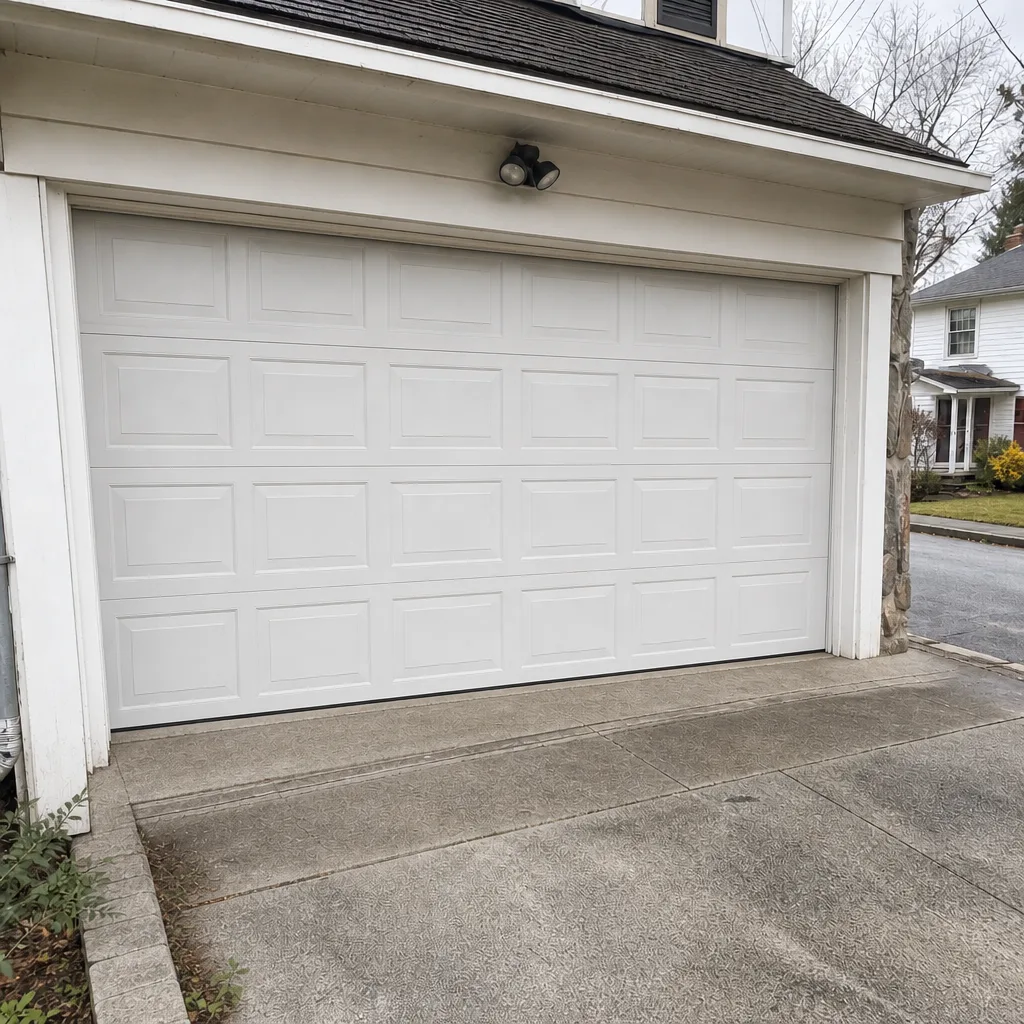
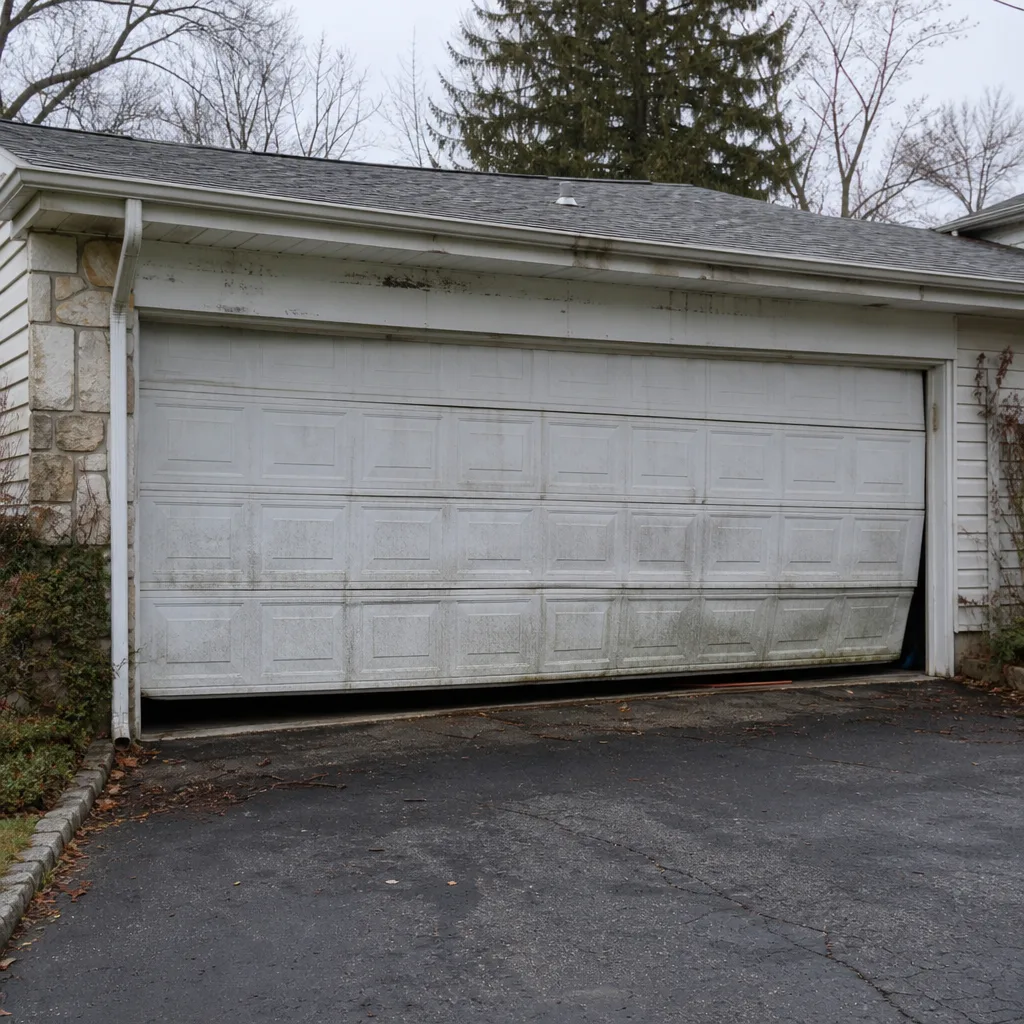
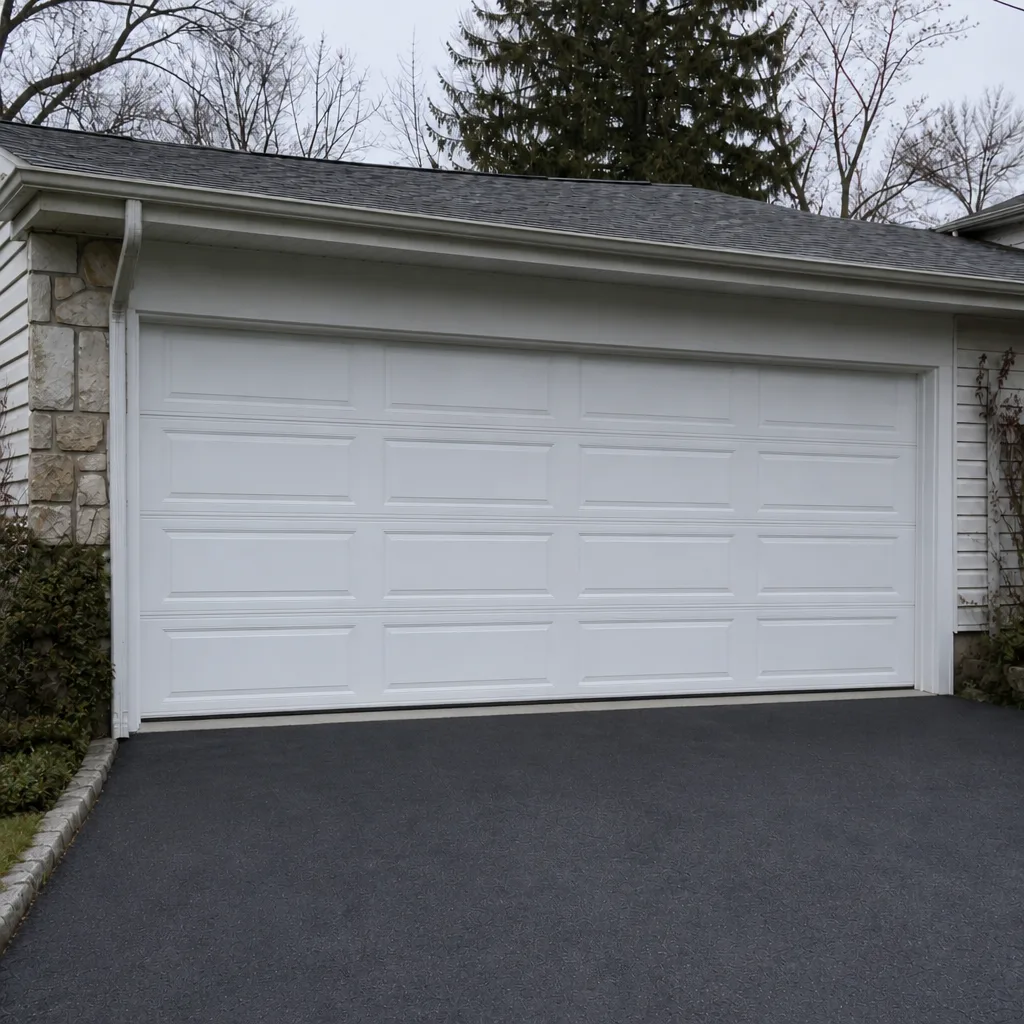
See the difference
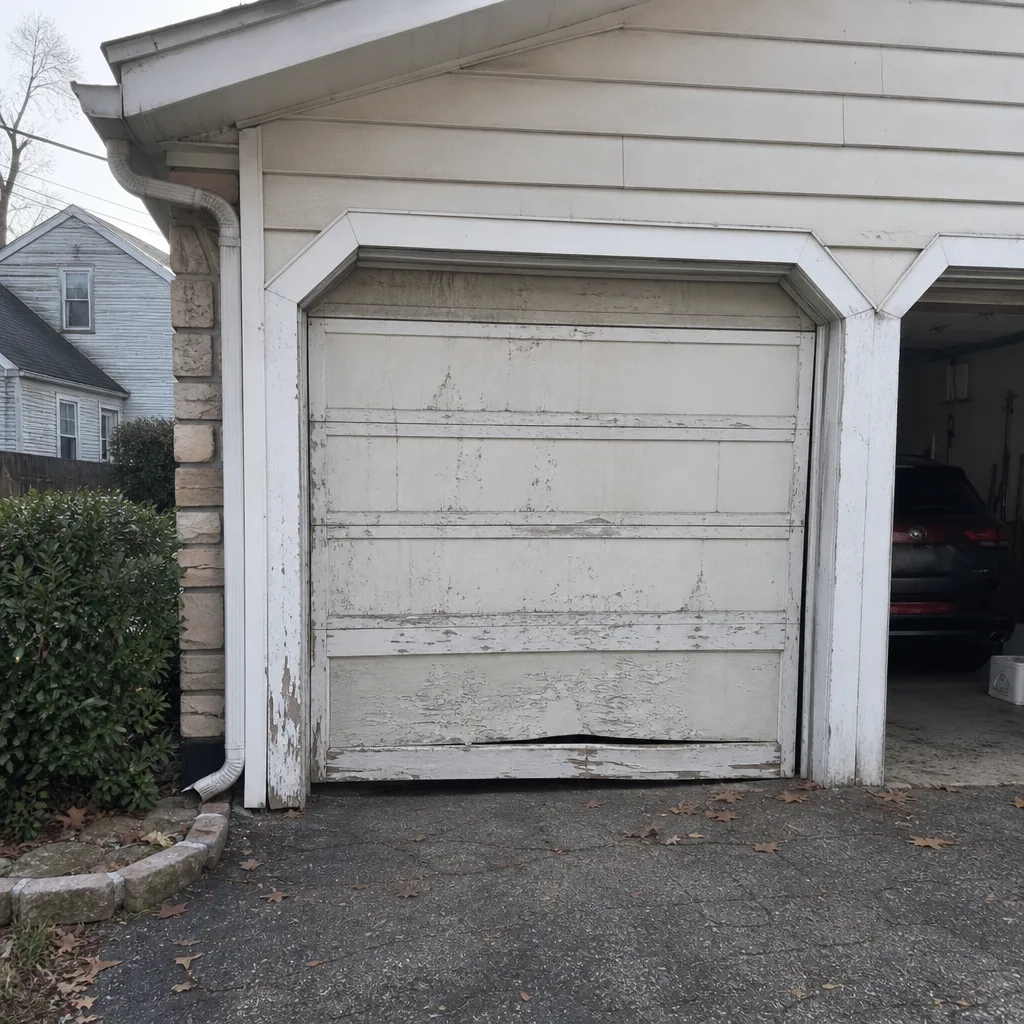 Before
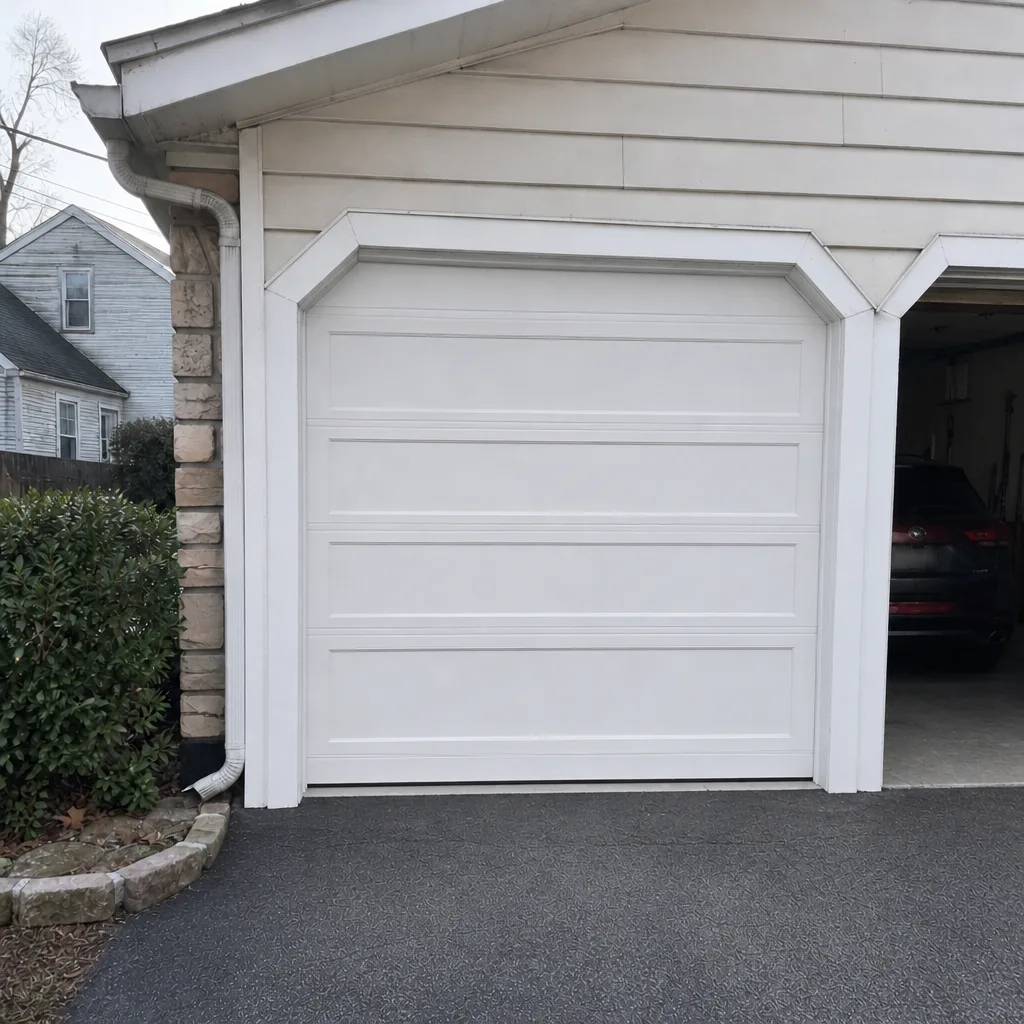 After
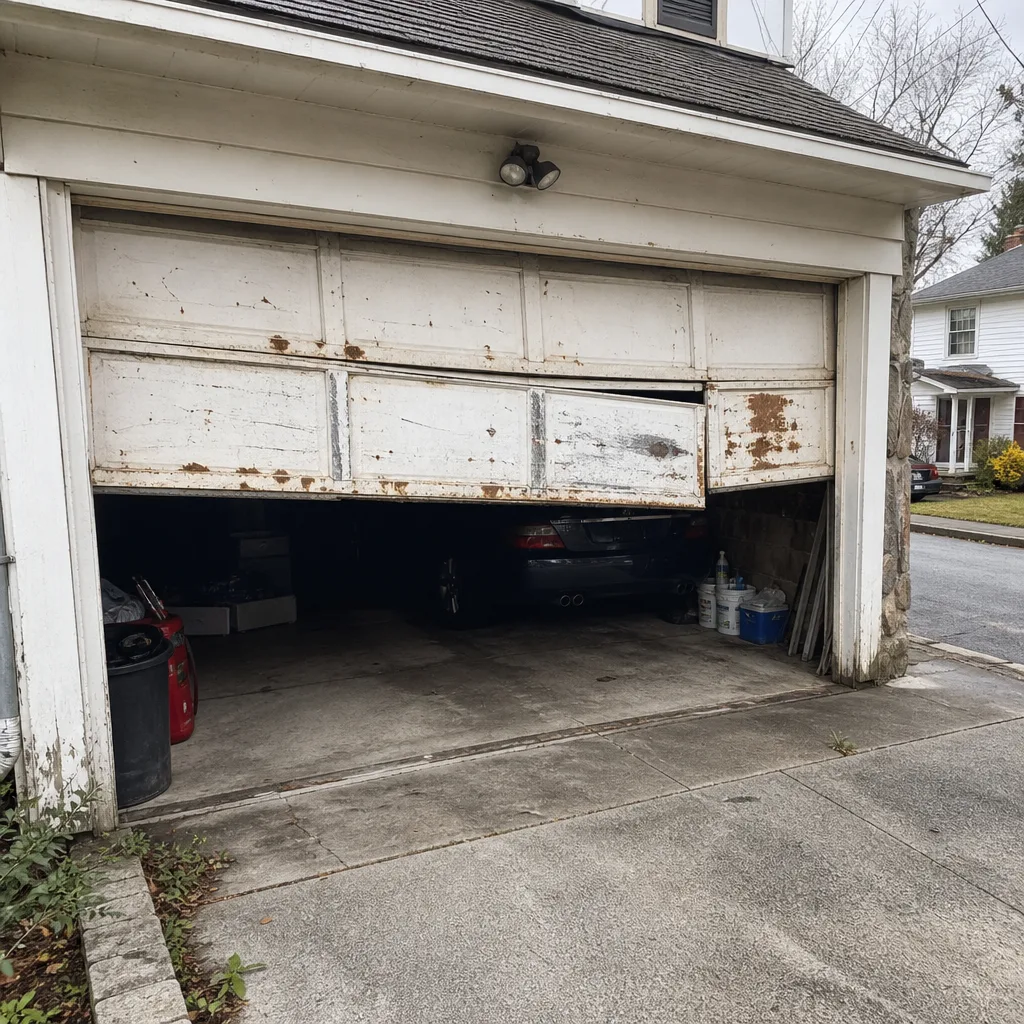 Before
 After
 Before
 After
Common Mistakes to Avoid
- Pulling the red release cord at an angle with the door partway up. This jams the trolley against the carriage and bends the release mechanism, turning a simple job into a trolley replacement on top of it.
- Lifting a door with a broken spring by hand. The spring carries the weight, and without it you’re pulling 200-plus pounds with nothing to help. Let a trained technician handle it.
- Leaving a door stuck open overnight in a dense Port Chester neighborhood. The wind load during a storm bends panels and tracks. And in a close-set street, an open garage after dark is a security problem. Close it or block it.
- Assuming the battery backup will work when you need it. A pack that’s never been tested or replaced runs out exactly when the grid goes down. Test it before the next nor’easter.
- Running a dead opener hoping it catches. If the door doesn’t move, the opener is stripping its gear or burning its motor every time you hit the button. Unplug it.
- Calling “a handyman” for a spring or a stuck door. These are the two most technically demanding repairs in the trade. A generalist who dabbles in garage doors is the wrong call for exactly the jobs that go wrong.
- Accepting a price over the phone without a written quote. Ask for the price agreed and written before any work starts. It’s the only way to know what you’ll pay.
When to Call a Professional
Call a professional for any broken spring, a door off its tracks, a snapped cable, an opener that hums and doesn’t move, or a door stuck open with the weather coming in. These are the situations where a homeowner DIY move is most likely to cause an injury or turn one repair into three. The rest – a dead remote, a misaligned safety sensor, a noisy roller – can usually wait for a scheduled visit. If you’re not sure which of those you’re looking at, call and describe it; we’ll tell you honestly whether it needs an emergency visit or can wait.
Port Chester Garage Door Repair Pros offers free estimates in Port Chester – call (877) 492-4069. Estimates are free, the price is agreed before any work starts, and the local pro is licensed and insured as their state requires. One call, one specialist, one less thing to worry about.
Frequently Asked Questions
Yes, if the springs are healthy and you release the trolley first – pull the red cord straight down with the door fully closed, then lift the door by its bottom handle. If the door feels heavy or won’t stay up, don’t force it; a failing spring makes hand-lifting dangerous. Call (877) 492-4069 for an exact quote if the door won’t lift – estimates are free.
Close it if at all possible, and if it won’t close, block the opening from inside, latch the house entry door, and call it in as a security emergency. A door stuck open is a priority call because the opening is exposed. Call (877) 492-4069 and say it’s a security issue so it gets prioritized.
No – the written price is the price. The technician diagnoses the failure, quotes the repair in writing, and you agree before any work starts. If the repair turns out to be bigger than expected, you hear about it before, not after. Call (877) 492-4069 for a free estimate.
The local pro we connect you with is licensed and insured as their state requires. Our technicians have up to 10 years of experience and work on the major brands – LiftMaster, Chamberlain, Genie, Clopay, Amarr, Wayne Dalton, Craftsman, and Raynor – so the system on your door isn’t a guessing game. Call (877) 492-4069 for an exact quote.
Emergency garage door calls are a core offering, and we aim to get a technician out fast, not just “soon.” Repairs and emergencies get the quickest response; spring replacements and installations are measured and scheduled. Call (877) 492-4069 and describe what’s happening so the right parts come the first time.
Yes, given how often nor’easters knock out the grid here, and how many homes here rely on a garage door as the main way in and out. A sealed rechargeable battery backup keeps the door working through an outage instead of stranding the car. Ask about it when you call (877) 492-4069 – estimates are free.
The Bottom Line
Garage door emergencies are mostly about the ten minutes after the failure, not the failure itself. Learn the manual release and do it with the door down. Secure a stuck-open door against wind and exposure. Never touch a broken spring – call a specialist. Test your battery backup before the next storm, not during it. And when you call, describe the symptom clearly so the right parts come the first time. The rest is a repair. Port Chester Garage Door Repair Pros handles emergency garage door calls across Port Chester with technicians who do this work every day. Free estimates, (877) 492-4069, price agreed before any work begins.
Garage doors are all we do – and that focus shows in every repair. Browse our Port Chester Garage Door Repair Pros page for the full range of services, from spring repair to full installation.
Call (877) 492-4069 today for a free estimate and to get your door back to working the way it should.
Written by the team at Port Chester Garage Door Repair Pros.