Last updated November 23, 2026
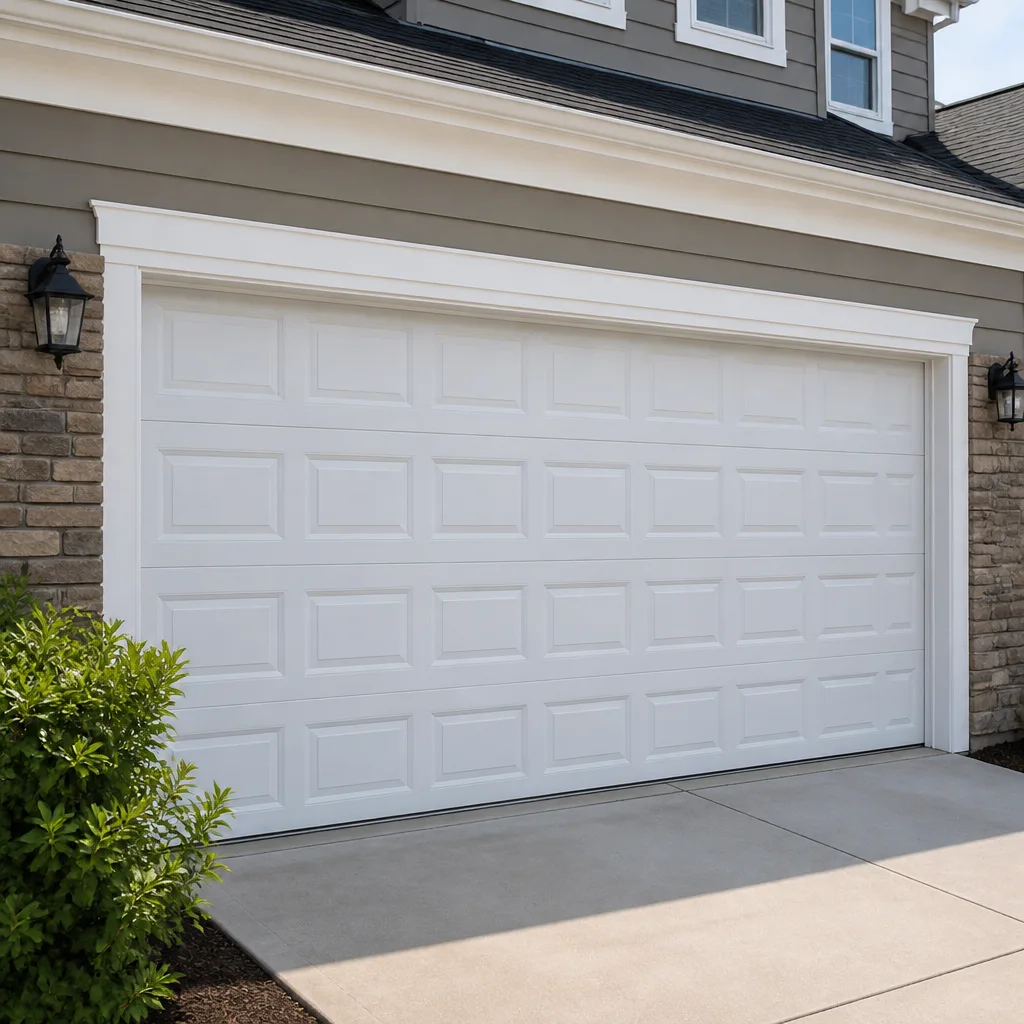 Raised-panel steel
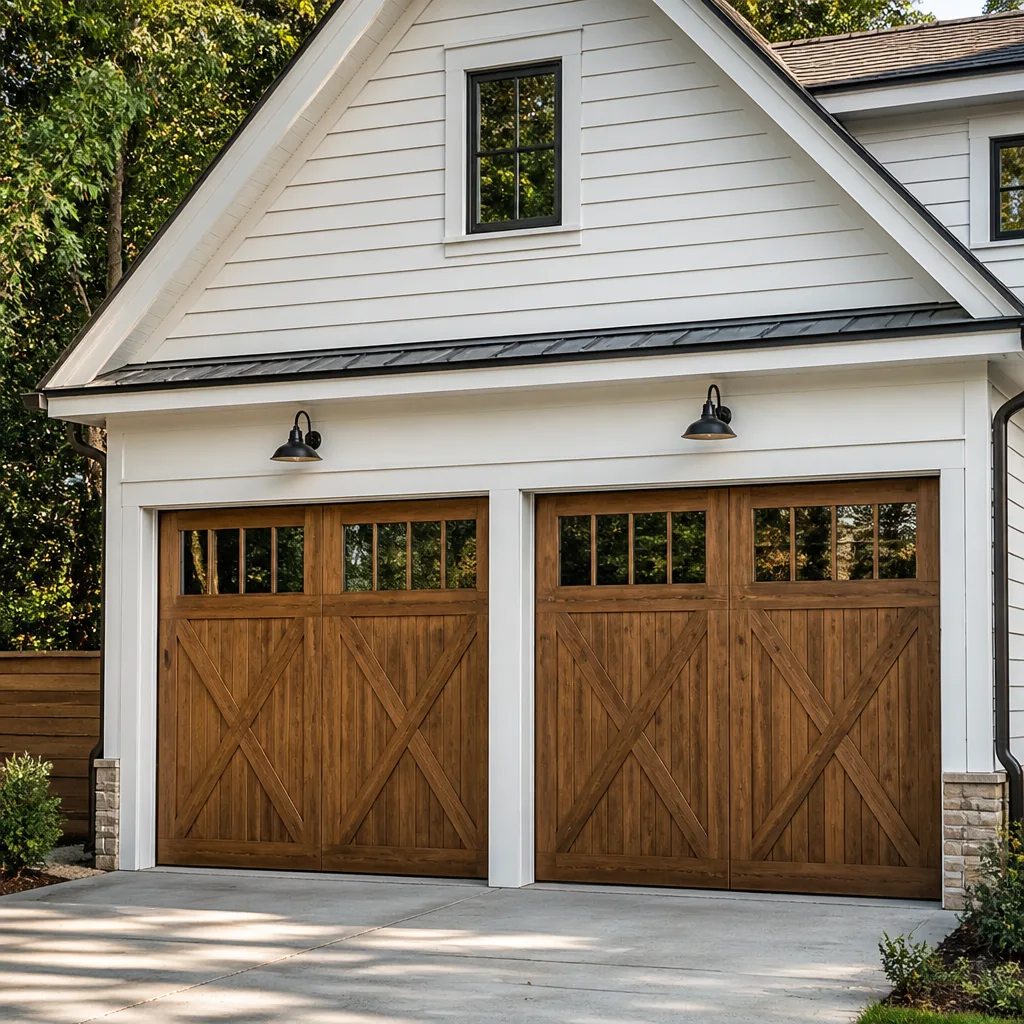 Carriage house
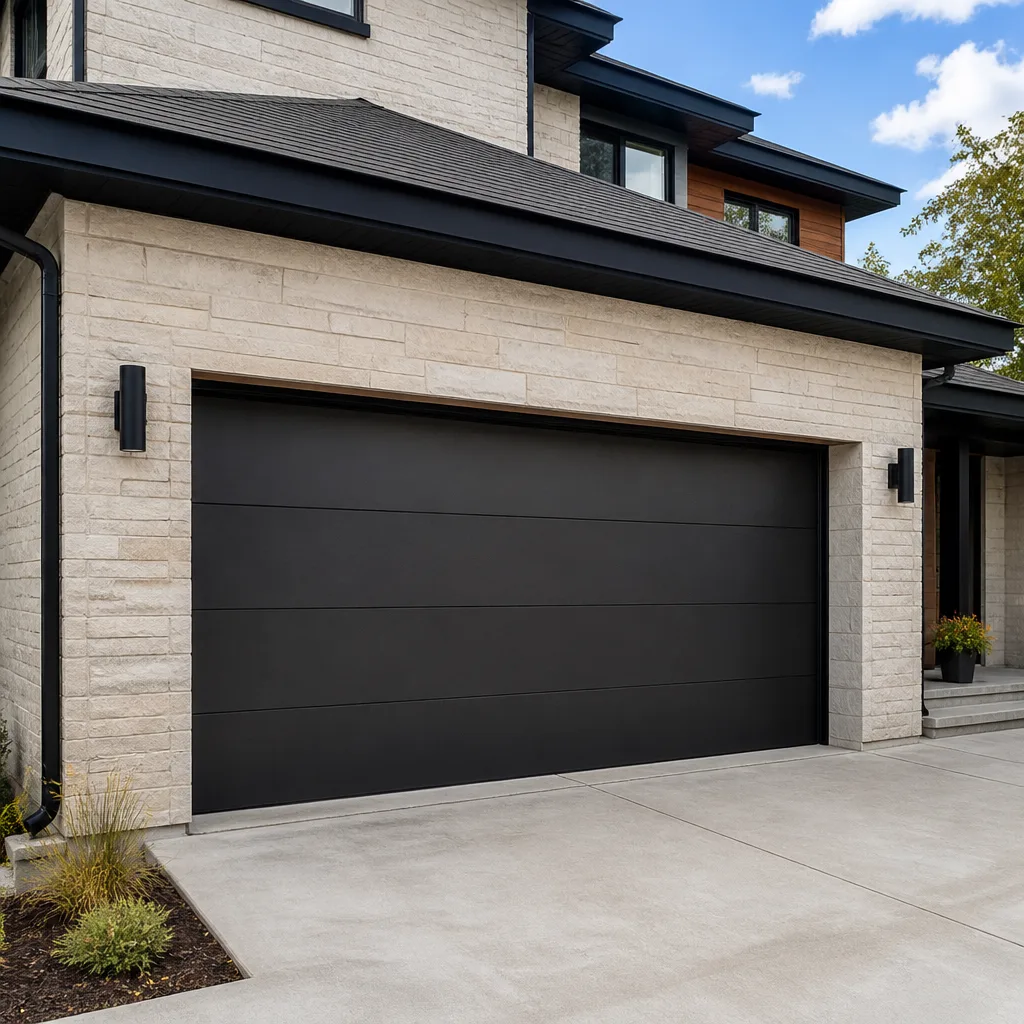 Modern flush
 Full-view glass
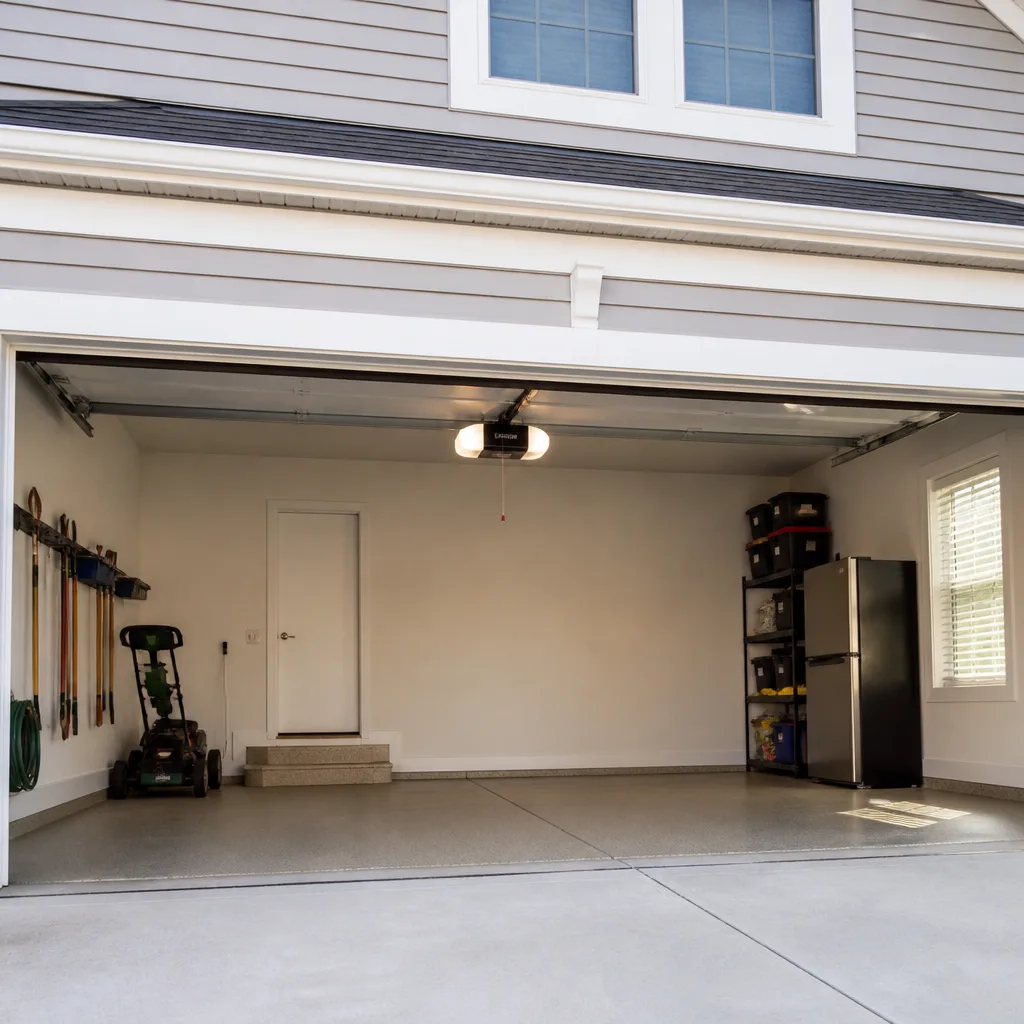 LiftMaster openers
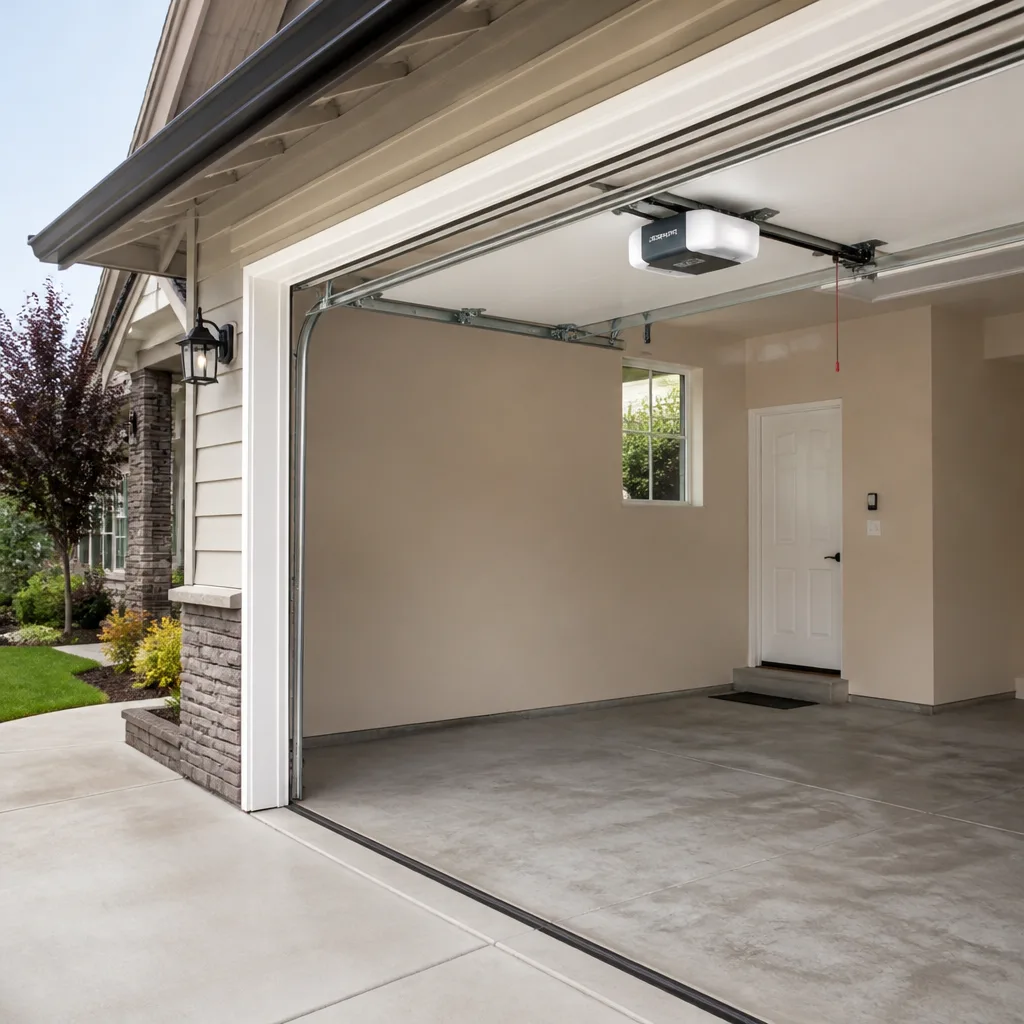 Chamberlain openers
Full 25-point door and opener safety check with every visit - springs, cables, rollers, tracks, and your LiftMaster or Chamberlain opener included
You get a price before we start. It does not change when the pro arrives.
Get your free estimateHow to Hire a Garage Door Contractor in Port Chester: A Step-by-Step Guide
Most Port Chester homeowners think the hardest part of a garage door project is the price. It isn’t. The harder question is figuring out who’s actually qualified to touch the torsion spring over your car. New York doesn’t issue a statewide “garage door contractor” license, so there’s no single credential you can look up and trust at a glance. That gap is where a lot of the trouble starts: a general handyman with a ladder quotes the job, does it once, and then you’re the one calling someone else six weeks later when the door is slamming again. This guide walks you through what New York actually requires in Westchester County, what to ask a contractor before you hire, and how to read an estimate so nothing gets hidden behind “labor included.” You’ll finish knowing exactly what separates a true garage door specialist from a generalist who happens to own a wrench set – and you’ll make a better call for your Port Chester home.
Quick Answer
To hire a garage door contractor in Port Chester, start by confirming the company holds the home improvement contractor (HIC) registration Westchester County requires for any home improvement work over $500, then verify liability insurance and workers’ compensation coverage directly with the insurer before anyone touches your door. From there, ask questions that reveal whether you’re talking to a true garage door specialist – spring types, brand familiarity with systems like LiftMaster or Wayne Dalton, and warranty terms in writing – rather than a generalist. Get a written estimate that itemizes parts and labor separately, and never accept a spring replacement price quoted over the phone without a site visit.
Styles & brands we work with
- Raised-panel steel
- Carriage house
- Modern flush
- Full-view glass
- LiftMaster openers
- Chamberlain openers
Table of Contents
- What Does New York Actually Require for Garage Door Contractors?
- What Questions Reveal a True Specialist vs. a Generalist?
- How Do You Verify Insurance Before Work Starts?
- How Do You Read a Garage Door Estimate Line by Line?
- What Are the Red Flags Specific to Garage Door Work?
- Why Spring Type and Brand Matter More Than You Think
- What Should a Warranty Actually Cover?
- When Is It Time to Replace Instead of Repair?
What Does New York Actually Require for Garage Door Contractors?
New York State does not issue a specific “garage door contractor” license. That’s the first thing to know, and it’s the fact that trips up a lot of Port Chester homeowners who go looking for a state license number and find nothing. What New York does require is a home improvement contractor (HIC) license for anyone doing residential home improvement work over $500 in Westchester County. That license is issued at the county level, not the state level, so it’s the one you should be checking before you hire anyone to work on your garage door. (Specifics on cost and registration details vary, so confirm current requirements with Westchester County directly.)
Here’s what that means in practice:
- The HIC license is a baseline for legitimacy, not proof of garage door expertise. A general contractor can hold one and still have never replaced a torsion spring.
- New York doesn’t license garage door specialists as a separate category, so there’s no higher credential to hunt for – which puts more weight on the questions you ask and the estimate you receive.
- A contractor who can’t tell you their HIC license status, or who can’t produce it when asked, is a pass. No exceptions.
- Beyond the HIC license, confirm they carry general liability insurance and workers’ compensation coverage – we cover how to verify both below.
Because there’s no state-level specialty license to fall back on, the burden of due diligence sits with you as the homeowner. That’s not a reason to panic; it just means a few extra questions and a phone call or two to an insurer are worth your time. In our experience, the contractors who are genuinely qualified are happy to walk you through their credentials and insurance without hesitation. The ones who get cagey about it are the ones you want to avoid.
What Questions Reveal a True Specialist vs. a Generalist?
The single best way to tell a garage door specialist from a general handyman is to ask questions a generalist can’t bluff their way through. These don’t need to be confrontational – think of them as a conversation that reveals depth. A true specialist lives in the details; a generalist gives you vague, surface-level answers and pivots to the price.
Start with these questions, and listen to how specific the answers are:
- “What type of springs are on my door – torsion or extension?” If the answer is “I’ll find out when I get there,” that’s a warning sign. A specialist can tell you from a photo or a description, and explains the difference clearly. Torsion springs mount horizontally above the door; extension springs run along the sides. Spring repair is one of the most dangerous jobs on a home, and a specialist treats it that way.
- “Which brands do you work with regularly?” Brand familiarity matters because the internals differ. We work on LiftMaster, Chamberlain, Genie, Clopay, Amarr, Wayne Dalton, Craftsman, and Raynor systems every day – and that means when we open your opener or measure your door panels, we know what we’re looking at without a brand-matching guessing game.
- “What’s covered by the warranty, and for how long?” A real specialist gives you a clear parts-and-labor warranty in writing. A generalist usually offers something verbal and vague: “you’re covered.” Push for specifics.
- “Have you worked on this type of door before?” A custom carriage-style door, a heavy insulated panel, or a Raynor commercial-grade system all behave differently than a standard residential door. A specialist has a quick reference point; a generalist is learning on your dime.
- “What does the site visit involve?” A qualified contractor measures headroom, checks the balance of the door, inspects track and springs, and evaluates the opener’s condition – all before quoting. Anyone quoting a rebuild or a spring swap without laying eyes on the door is guessing.
The pattern to notice is specificity. A specialist answers in concrete terms – spring gauge, opener model, warranty length – because they’ve seen these systems thousands of times. A generalist answers in generalities. Both might be polite, but only one can actually diagnose your door correctly the first time.
How Do You Verify Insurance Before Work Starts?
This is the step most homeowners skip, and it’s the one that can cost you. Before anyone touches a torsion spring on your property, verify two things directly: general liability insurance and workers’ compensation coverage. A garage door spring under tension can cause serious injury, and if a contractor or their worker gets hurt on your property without insurance in place, the liability can land at your feet. It’s a short conversation now, or a longer one later.
Here’s how to actually verify coverage instead of taking someone’s word for it:
- Ask for a certificate of insurance (COI) that names your address as the project location. A COI is a one-page document from the insurer listing coverage amounts and effective dates.
- Call the insurer listed on the COI to confirm the policy is active. It’s a two-minute call, and it’s the only verification that counts. A certificate can be a year old; the phone call settles it.
- Confirm workers’ compensation coverage separately. General liability covers property damage and injury to others; workers’ comp covers injuries to the workers themselves. You want both.
- Check the expiration date. If the policy expires before your scheduled work date, ask for an updated certificate.
- Keep the COI for your records until the job is finished and inspected to your satisfaction.
We can work with your insurer directly if any questions come up during the process, but the point of verifying yourself is that you walk away with confidence independent of anyone’s reassurance. A contractor who’s insured and licensed won’t blink at these requests. In our experience, the ones who push back on a COI request are telling you something important.
How Do You Read a Garage Door Estimate Line by Line?
An estimate isn’t a piece of paper you sign and forget – it’s the document that tells you whether the contractor is being transparent or burying costs. The single phrase that hides the most is “labor included.” That phrase can mean the full job’s labor is priced in, or it can mean the base labor was priced in and anything beyond the basic swap is billed hourly once the crew is on site. You need to know which before you sign.
Read every garage door estimate with these filters:
- Parts listed separately from labor. A spring, an opener, and rollers should each have their own line with a price. If everything is lumped into one number, ask for a breakdown.
- “Labor included” defined. Ask: does that cover diagnosis, removal of the old part, installation, and cleanup? Or does anything beyond the standard install come as an extra charge?
- Diagnostic fee disclosed upfront. Some contractors charge a trip fee for the site visit; some don’t. Know before you agree.
- Warranty terms written in. Parts warranty and labor warranty should be stated with durations, not promised verbally.
- Brands and model numbers named. If the estimate says “spring” without a gauge or brand, ask for the specific part. A generic line means a generic part.
- Disposal included. Old doors, tracks, and springs have to go somewhere. Confirm it’s in the price.
The phrase “the number we quote is the number you pay” isn’t how a real estimate works – a written estimate sets the final price, and any additional work should be discussed and approved before it happens, not billed afterward. If the contractor can’t put the breakdown on paper before you start, they can’t hold themselves to it.
Wondering about typical costs in the area? A single torsion spring replacement in Port Chester generally runs in the $180 to $340 range, and since matched springs are almost always replaced together, expect a pair to land around twice that. Remember that those are estimates – the written quote sets the final number.
What Are the Red Flags Specific to Garage Door Work?
There are warning signs that apply to hiring any contractor, and there are warning signs that only show up in garage door work. Because our trade has a handful of technical demands a generalist can’t fake, the red flags are specific too. Watch for these.
- A same-day spring replacement quoted over the phone without a site visit. Spring replacement pricing depends on the spring type, door weight, and access. Anyone quoting a firm number before seeing the door is guessing, and the guess usually grows once they arrive.
- No questions about headroom. If a contractor is quoting a new door installation and never asks how much clearance you have below the ceiling or between the door and the ceiling, they haven’t thought it through. Headroom determines what low-clearance or high-lift hardware is needed, and getting it wrong means a door that won’t open fully.
- Vague brand answers. If you mention your opener’s brand and you get a shrug instead of a specific response, that’s a specialist gap. We work on the eight major brands every day precisely because homeowners shouldn’t have to worry about that.
- Pressure to skip the COI. A licensed, insured contractor has a certificate ready. A contractor who resists verifying insurance isn’t one to let onto your property for spring work.
- Warranty by word of mouth only. “We stand behind our work” is not a warranty. A written part-and-labor warranty is.
- No written estimate at all. If the price is verbal, it moves. Get it in writing, every time.
- Bait pricing on springs. A spring replacement priced well below the typical range in this market is usually a lever to add charges once the job is underway. Ask what’s included before you commit.
In our experience, the most common failure isn’t a contractor who openly cuts corners – it’s a well-meaning generalist who doesn’t know the trade well enough to spot a worn track or a mismatched spring. The result is a door that works for a few weeks and then starts fighting you again. That’s the callback cycle you want to avoid.
Why Spring Type and Brand Matter More Than You Think
Garage doors are counterbalanced systems, and the springs do the heavy lifting. That’s why spring type and brand compatibility matter more than most homeowners realize coming in. If the wrong spring goes on the wrong door – wrong gauge, wrong wind direction, wrong brand’s hardware – the door becomes misbalanced, the opener works harder, and the next failure comes faster. It’s one of the main reasons a “repair” from a generalist turns into a callback within weeks.
A few things worth knowing as a hiring filter:
- Springs come in torsion and extension configurations. A torsion spring mounts on a shaft above the door, and both springs in a pair must be replaced together if they’re matched. Replacing one of a pair is a common mistake.
- Springs are sized by gauge, length, and inside diameter – not just “standard.” A specialist matches all three to your door’s weight.
- Winding direction matters. Left-wound and right-wound springs are not interchangeable. A mismatch can make a door dangerous.
- Brand systems have their own hardware. Opener rail designs, panel profiles, and track hardware differ between LiftMaster, Chamberlain, Genie, Clopay, Amarr, Wayne Dalton, Craftsman, and Raynor. A specialist knows the differences.
Here’s the safety point worth flagging: torsion springs are stored energy, and they can release violently. This is not a do-it-yourself job, and we’d say that even if it weren’t our business. If you’re considering a spring repair, call a trained technician. Garage door spring repair is one of the most dangerous DIY jobs in a home, and it’s a job that specialist techs are trained for.
What Should a Warranty Actually Cover?
A garage door warranty has two parts, and both need to be in writing before the job starts. The first is a parts warranty – the manufacturer’s coverage on the spring, opener, or door panel itself. The second is a labor warranty – the contractor’s promise that their workmanship will hold up. A qualified contractor offers both with clear durations, and lists them in the estimate.
What to confirm before you sign:
- Parts warranty duration and what voids it. Some manufacturers require installation by an authorized technician to honor the warranty, so ask whether the contractor’s work preserves it.
- Labor warranty duration. How long is the workmanship covered, and what happens if the spring or opener fails within that window?
- What the labor warranty excludes. Wear items and damage from misuse are often excluded. Get the list.
- Whether the warranty is transferable. If you sell the home, transferability matters to the next owner.
- Whether it’s in the written estimate. If the warranty isn’t written down, it isn’t a warranty.
The test is simple: ask the contractor to show you the warranty terms in writing before work begins. If they can’t produce them, the warranty is verbal and you have no recourse.
When Is It Time to Replace Instead of Repair?
There’s no single answer, but a few concrete signals usually point toward replacement rather than another repair. A door that’s had multiple spring failures, a door panel that’s dented or rusted, or a door that’s simply reached the end of its useful life may not be worth another patch-up. Replacing the door means new springs, new hardware, and a system matched as a unit. That’s a different conversation from a repair.
Signs it’s time to talk replacement:
- The door is more than about 15 to 20 years old. Most residential garage doors hit that range, and hardware begins failing in clusters after that point.
- Repairs are repeating. If you’ve had two spring or track repairs in a short window, the underlying system is worn.
- The panels are damaged. Dented, rotted, or cracked panels can be replaced individually, but if multiple panels are gone, a new door is usually more economical.
- The opener is old and the door is heavy. An aging opener struggling with an aging door is a mismatch that wears both systems.
- You’re upgrading insulation. A well-insulated door is a different class of product, and a new door with matched springs is the cleanest path.
When you’re ready to move on replacement, it’s a measured job: a technician measures the opening, confirms headroom and clearance, and writes a written quote on a door matched to your opening. This isn’t a same-day decision, and we never promise it is. What we do promise is that a garage door repair specialist will help you sort out whether repair or replacement is the right call rather than pushing the more expensive option.
Common Mistakes to Avoid
- Hiring the lowest price without asking about spring type or insurance. Two sentences of due diligence before the call can save you a callback. Ask what’s included, then verify the COI.
- Accepting a spring price quoted over the phone without a site visit. Spring pricing depends on the door’s weight, spring type, and access. A quote made sight unseen is a placeholder, not an estimate.
- Skipping the headroom conversation on new installations. In a Port Chester home with a low-ceiling garage, this makes or breaks the door. A contractor who doesn’t ask about headroom hasn’t planned the install.
- Treating a generalist’s warranty as if it’s a specialist’s. “We stand behind our work” is not a warranty. Get the parts and labor terms in writing.
- Assuming every opener brand works the same way. It doesn’t. LiftMaster, Chamberlain, Genie, Clopay, Amarr, Wayne Dalton, Craftsman, and Raynor all have quirks. A specialist knows them; a generalist doesn’t.
- Replacing only one spring in a matched pair. Matched pairs are replaced together. Going alone with one spring speeds up the failure of the other and creates imbalance.
- Letting a contractor start without a written estimate. If the price is verbal, it can change. Get it on paper, with the final price stated clearly.
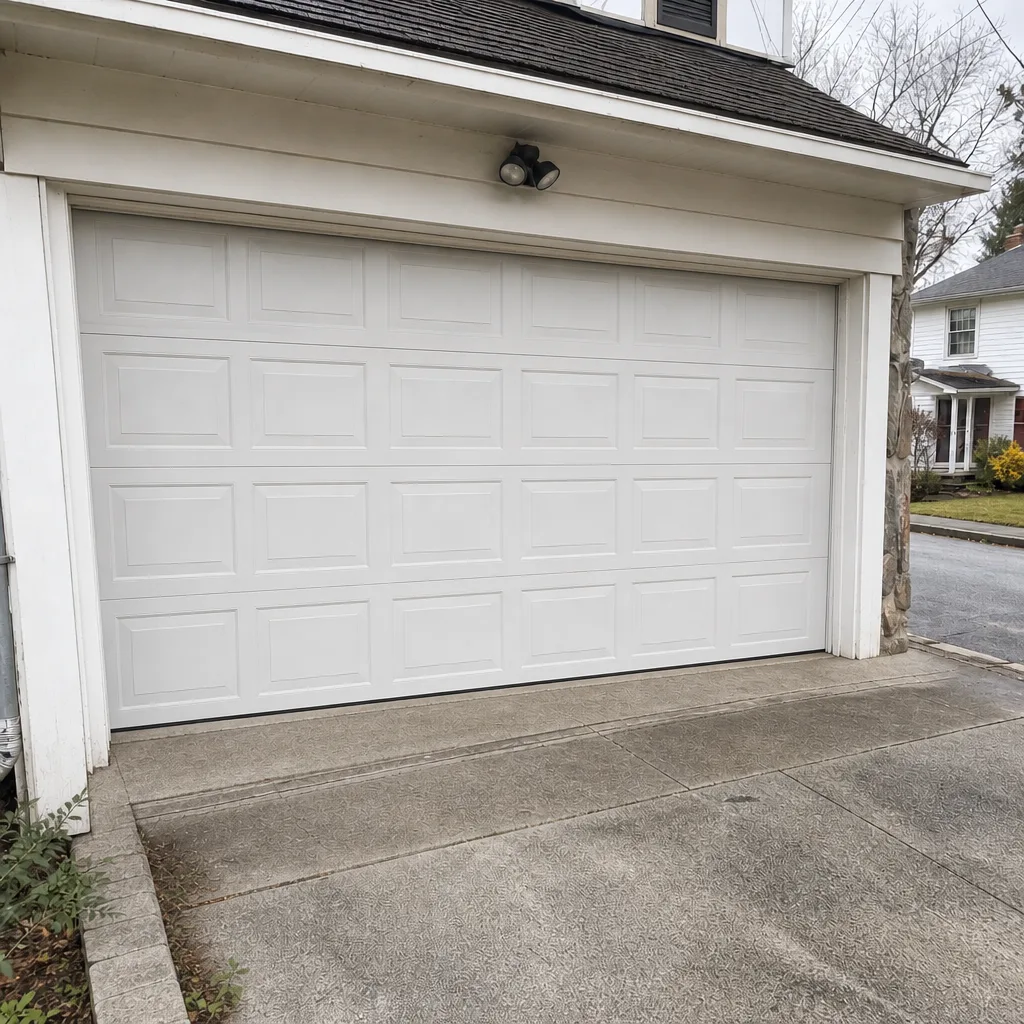
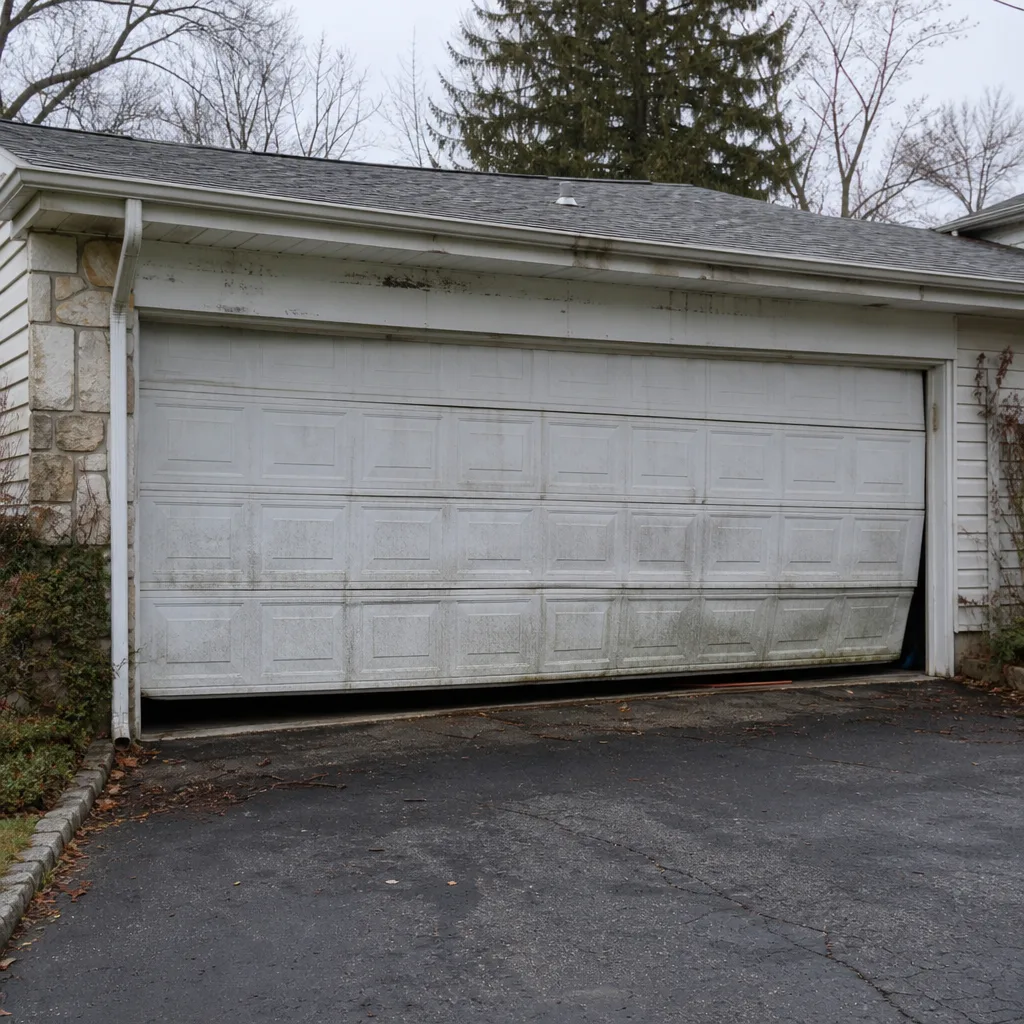
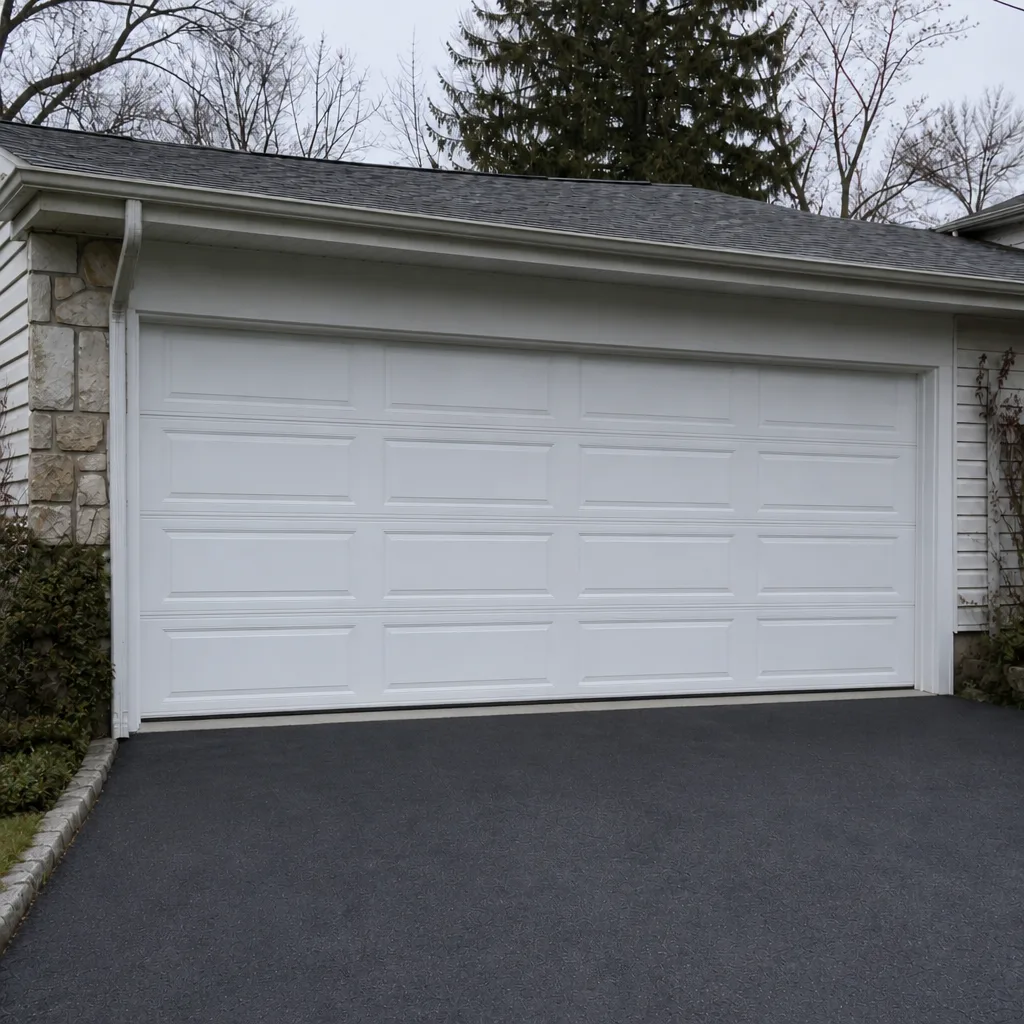
See the difference
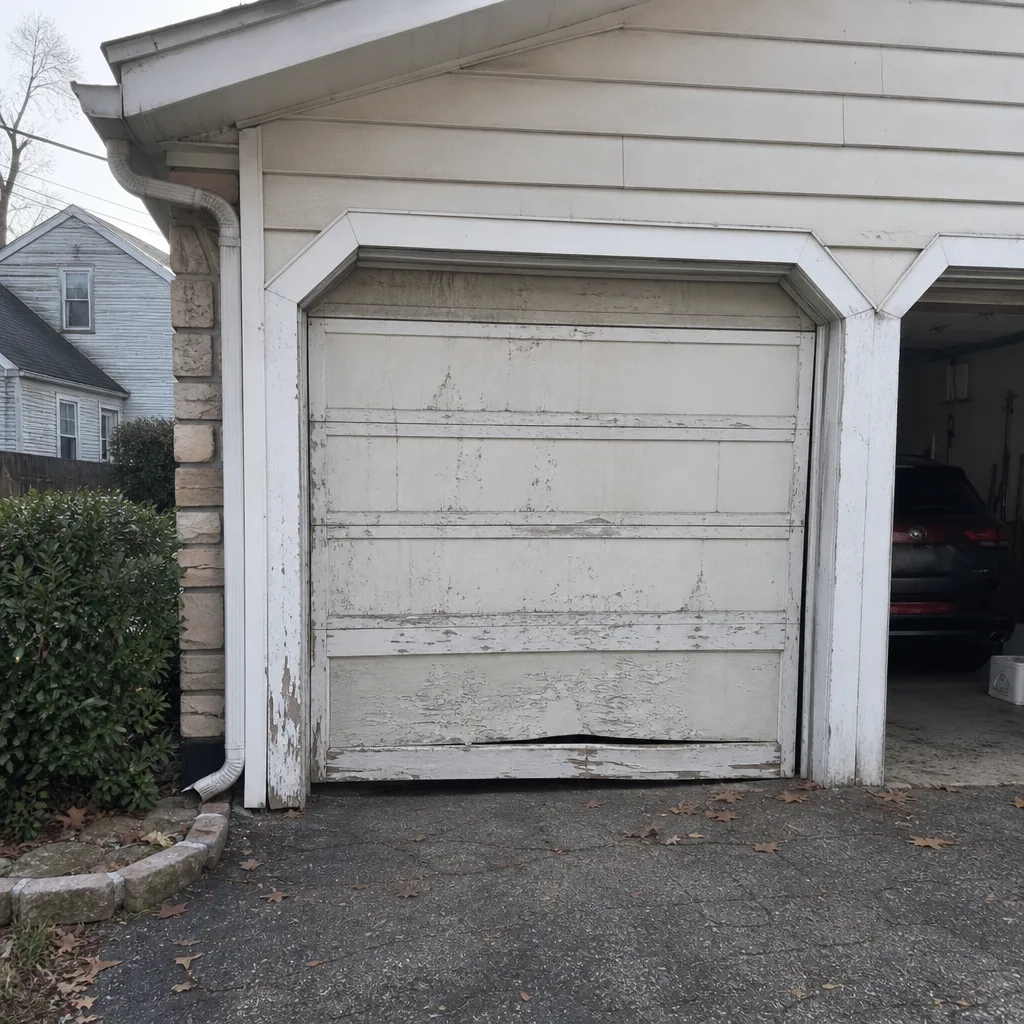 Before
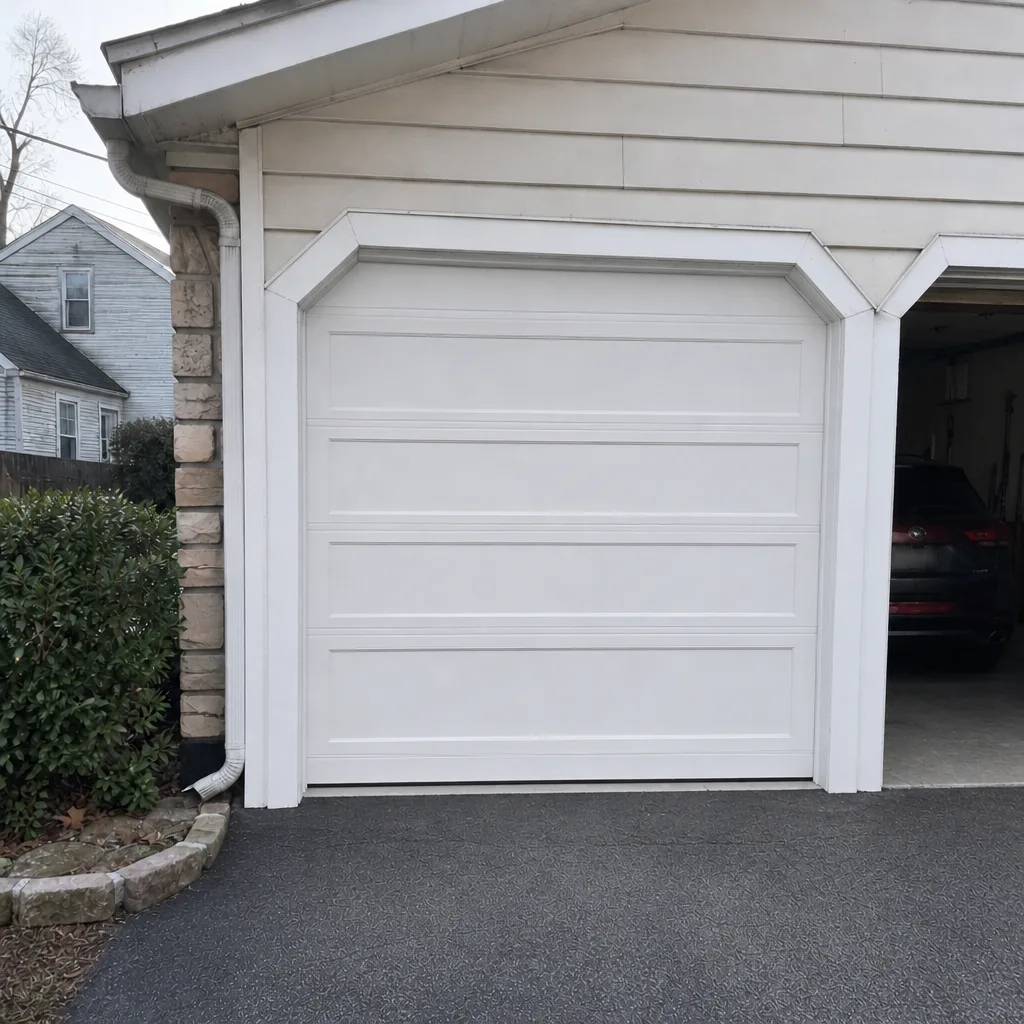 After
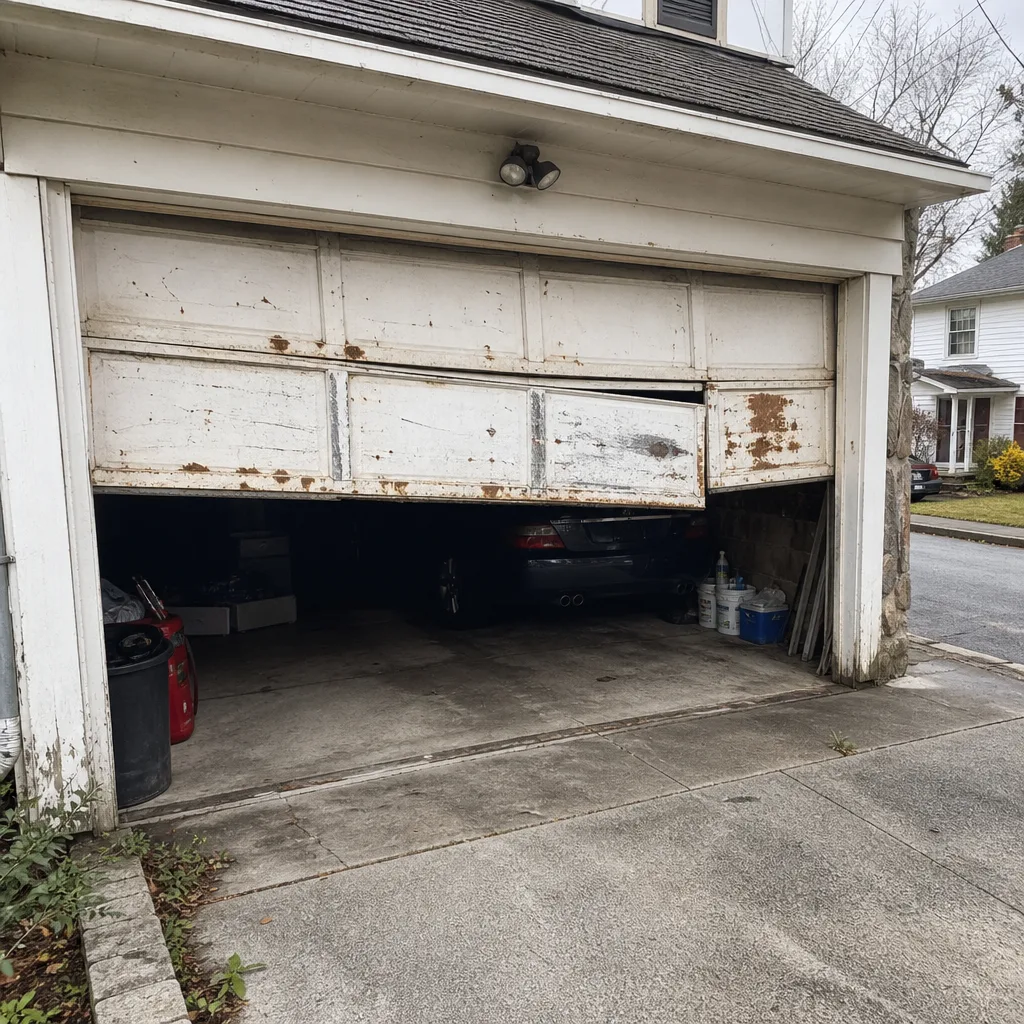 Before
 After
 Before
 After
When to Call a Professional
Some garage door problems are safe to think through yourself – a noisy track, a remote that needs reprogramming, a door that needs lubricating. Others need a trained technician, full stop. Call a professional if:
- A spring is broken, sagging, or making a loud popping sound.
- The door won’t open or close, and you or your car are stuck behind it.
- A cable is loose or off the drum.
- The door came off its tracks or is hanging crookedly.
- The opener runs but the door doesn’t move.
- The door reverses unpredictably or slams shut.
For emergencies – a trapped car, a door off its tracks, a home left unsecured – Port Chester Garage Door Repair Pros offers emergency service, and a specialist can help you sort out options quickly. For non-urgent repairs, the same specialist can see you soon and quote you a fair price before starting. Port Chester Garage Door Repair Pros offers free estimates in Port Chester – call (877) 492-4069.
Frequently Asked Questions
Typical torsion spring repair in Port Chester runs about $180 to $340 for a single spring, and a matched pair is around twice that because both should be replaced together. A specialist confirms the price after seeing the door and confirms the written estimate sets the final number. Call (877) 492-4069 for an exact quote – estimates are free.
New York does not issue a state-level garage door contractor license, but a contractor doing residential work over $500 in Westchester County should hold a home improvement contractor (HIC) license at the county level. Ask for it, along with proof of insurance, before anyone starts. Call (877) 492-4069 to talk through what we verify.
A general handyman technically can, but shouldn’t in most cases. Torsion and extension springs are under high tension and can release violently – this is one of the most dangerous jobs on a home. A trained garage door specialist has the tools, know-how, and insurance to do it safely. Call (877) 492-4069 for spring repair done right.
Ask for a certificate of insurance (COI) that names your address as the project site, then call the insurer listed to confirm the policy is active. Confirm both general liability and workers’ compensation coverage. A contractor who’s properly insured will provide this without hesitation. Call (877) 492-4069 if you’re sorting through your options.
A qualified specialist should be fluent in the major residential brands: LiftMaster, Chamberlain, Genie, Clopay, Amarr, Wayne Dalton, Craftsman, and Raynor. Those eight cover nearly every home system in Port Chester. We work on all of them daily, so there’s no brand-matching guessing game when we arrive. Call (877) 492-4069 to book a visit.
Repair is usually the right call for a single spring failure, an opener problem, or a worn track. Replacement is worth discussing if your door is around 15 to 20 years old, if repairs keep repeating, or if more than one panel is damaged. A specialist measures the door, checks headroom and balance, and gives you both options in writing. Call (877) 492-4069 for a free estimate.
The Bottom Line
Hiring a garage door contractor in Port Chester comes down to doing a few things right: check the Westchester County HIC license, verify general liability and workers’ comp insurance directly with the insurer, ask the questions that separate a specialist from a generalist, and read the estimate line by line before anyone starts. The mistake we see most often isn’t picking the wrong price – it’s skipping that due diligence because the door is broken and the car is stuck. A specialist answers in specifics: spring type, brand, warranty duration, and a written estimate that sets the final price. Call (877) 492-4069 for a free estimate from a team that works on garage doors every day – one call, one specialist, one less thing to worry about. When your opener is the problem, a technician can take care of garage door opener repair as part of the same visit.
To learn more about the full range of options or to book a free estimate, the Port Chester Garage Door Repair Pros team is a single call away.
Written by the team at Port Chester Garage Door Repair Pros.